Creating a
Character
Character points, the four basic attributes, derived statistics, encumbrance, build, wealth, rank, and the full creation checklist — everything to build a character from scratch.
Before You Build
GURPS has no classes, no levels, no predetermined path. You receive a point budget — typically 100–150 points for a starting adventurer — and a broad menu of options. That open slate is the system's greatest strength and its most common stumbling block for new players. The first instinct is to open the book and start reading through options. That's the hard way.
Three things to do before you spend a single point:
- Talk to your GM first. The GM's campaign answers critical questions: What's the setting and Tech Level? What point total? Are magic, psionics, or special powers available? Several sections of this chapter — Social Background, Wealth, Status, Rank — are entirely campaign-dependent. You might spend thirty minutes reading them and need none of it. Ask first.
- Start with a concept, not a shopping list. Write one sentence describing who the character is before you open any lists. "A wiry street thief who talks her way out of trouble." "An aging scholar with more magic than muscle." "A berserker who's survived on fury and luck." That sentence tells you which attributes matter, which you can safely lower, and which advantages will earn their cost. Every spending decision should serve the sentence.
- The rules are a menu, not a mandatory checklist. The Basic Set contains hundreds of advantages, hundreds of skills, and optional traits no single character will ever use. None of it is required. A functional character needs a concept, some attributes, a handful of key skills, and whatever advantages fit the build. Everything else is available if you want it — not obligatory.
Sections marked ◈ Campaign-Dependent below cover traits that may be irrelevant to your game entirely. They're complete here for reference — skip them until your GM confirms they apply.
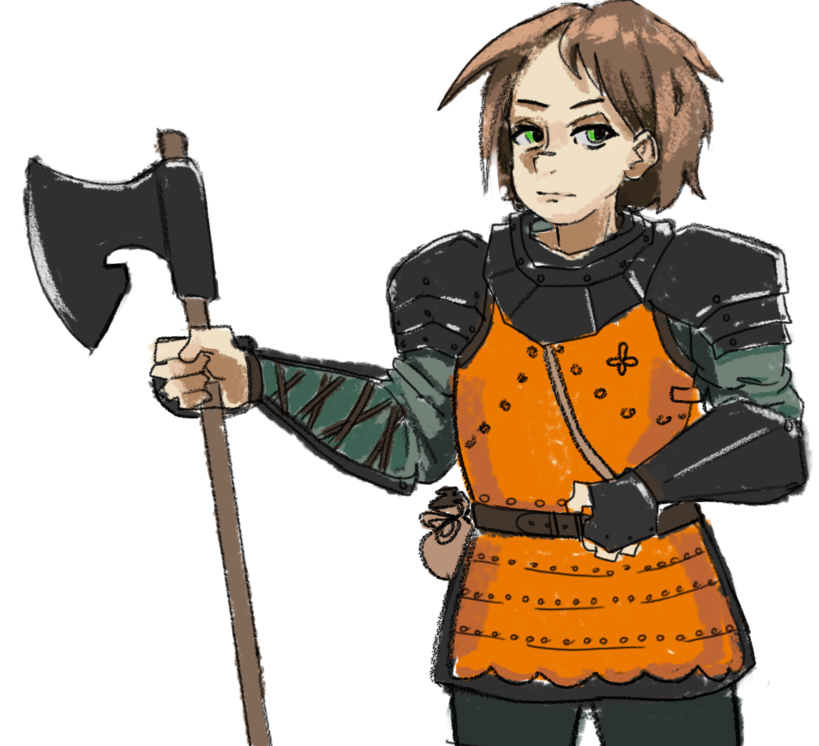
Three characters — each built on a different design philosophy — will guide every section of this chapter from concept to completed sheet. Aldric Vane tests the upper limits of raw intellect, Mira Ashfeld represents the balanced, grounded build most players reach for first, and Vora demonstrates what happens when physical capability becomes the sole priority. Together, on the same 150-point budget, they illustrate how the GURPS Basic Set rules produce entirely different characters from an identical foundation.
Character Points
Character points are the currency of character creation. Every ability has a listed cost. Abilities that improve your capabilities cost positive points; abilities that reduce them have a negative cost — they give points back to spend elsewhere. A character sheet is the record of every trade you made.
e.g.: 100 (attrs) + 10 (secondary) − 30 (advantages) + 15 (disadv.) = 95 pts used, 55 remaining in a 150-pt game
Points are never destroyed — only traded. Buying ST 12 (+20 pts) and IQ 8 (−20 pts) costs exactly zero net points, yet creates a radically different character from ST 10 / IQ 10.
Starting Points & Power Level
| Point Total | Character Type | Notes |
|---|---|---|
| Under 25 | Small children, animals | Very limited capability |
| 25–50 | Ordinary civilians | Minimal adventuring ability |
| 100–150 | Career adventurers | Most common starting range |
| 150–200 | Skilled veterans | Broadly competent |
| 250+ | Elite specialists | Above-human capability |
| 1,000+ | Godlike beings | Beyond normal play |
The Core Mechanic — 3d6 Roll-Under
Almost every action that could fail resolves by rolling 3d6 and trying to roll equal to or under a target number — usually a skill level or attribute score. Lower is better. Three dice produce a bell curve: 10 and 11 are the most common results, while very high or very low rolls are rare.
| Skill | Success % | Fail % | Reading | Meaning |
|---|---|---|---|---|
| 8 | 25% | 75% | 1-in-4 | Desperate — skill check only when forced |
| 10 | 50% | 50% | Coin flip | Average, untrained — the free baseline |
| 12 | 74% | 26% | 3-in-4 | Trained professional — reliable under pressure |
| 14 | 90% | 10% | 9-in-10 | Expert — rarely fails routine tasks |
| 16 | 98% | 2% | ~99-in-100 | Master-class — fails only on a natural 17–18 |
Going from skill 10 to 12 adds 24% success. Going from 14 to 16 adds only 8%. Each point matters more at the bottom than the top — which means don't neglect your weaknesses.
Hold disadvantages to 50% of starting points. In a 150-point game: no more than −75 pts. Campaign-mandated and racial template disadvantages are exempt.
Character Concept & Types
GURPS has no character classes. There is no pre-built list of roles to pick from — you purchase any combination of traits the GM permits. That freedom is deliberate, but it means the work of defining who your character is falls entirely on you before you touch the numbers.
The One-Sentence Rule
The most effective approach is concept first: write one sentence describing the character before opening any lists. That sentence becomes a filter — every spending decision either serves it or doesn't.
Before spending a single point, complete this: "My character is ___." Include a role, a personality hook, and optionally a setting note. "A disgraced knight who fights with her head as much as her sword." "A paranoid archivist who knows too much." "An overconfident pirate who's survived mostly by luck."
That sentence immediately tells you which attributes matter most, which you can safely lower, and which advantages will earn their cost. Anything that doesn't serve the sentence is a candidate to skip or deprioritise.
Three valid starting approaches exist — all work, choose what feels natural:
- ①Concept first — describe the character in plain language, then find the mechanical expression. Recommended for new players. Aldric, Mira, and Vora below were all built this way.
- ②Shopping first — browse ability lists and build a story around interesting combinations. Works well for experienced players exploring unusual builds.
- ③Biography first — answer personal questions (where are you from, what do you do, what's your biggest flaw?) and let those answers guide spending. Good for roleplay-focused players.
Questions That Shape Your Build
Before committing to any numbers, run through these questions. Your answers translate directly into mechanical priorities:
| Question | If Yes, Prioritise |
|---|---|
| Does your character fight at the front line? | ST, DX, HT · combat skills · Combat Reflexes |
| Does your character talk, bluff, or negotiate? | IQ · Charisma, Voice · social skills |
| Does your character use magic or psionics? | IQ, FP · Magery or Talent · spell / power skills |
| Does your character sneak, scout, or investigate? | DX, Per · Stealth, Tracking, Search |
| Does your character support, heal, or protect others? | IQ, HT · First Aid, Diagnosis · Empathy |
| Does your character rely on knowledge or technology? | IQ · Engineering, Expert Skills, Electronics |
What Will You Do in a Fight?
Every campaign eventually has combat. Even a scholar, diplomat, or thief needs an answer to this before finalising their build — a character with no combat utility sits out scenes that take up significant table time.
You don't need to be a front-line fighter. Options for non-combatants include: using ranged attacks from safety, providing cover or distraction, applying first aid between exchanges, using Tactics or Leadership to direct others, or simply having enough basic weapon skill to survive one exchange. At minimum, every character should have one combat-relevant option.
Generalist vs. Specialist
A specialist concentrates points for excellence in one area — Vora's physical dominance, or Aldric's intellect. They're exceptional at their focus but limited elsewhere. A generalist spreads points for breadth, contributing in many situations without being the best at any one thing. Mira is the generalist of the three.
Neither is wrong. One practical constraint: a 150-point character cannot be excellent at everything. Choosing not to invest in something is an active decision, not a mistake — the points you don't spend on ST go somewhere more important to the concept.
Disadvantages return points — which makes them tempting to stack. The trap is taking flaws you don't intend to roleplay. A disadvantage that never comes up gains you nothing and costs you the story that would make it worthwhile. A good disadvantage is one your character would genuinely have — one that will come up regularly and create interesting situations when it does.
The 50% limit exists so you can't fund an entire build off flaws. In a 150-pt game: no more than −75 pts from disadvantages. Campaign-mandated and racial template disadvantages don't count toward the cap.
Common Archetypes
Starting frameworks — treat them as a concept anchor, not a constraint. Mix freely.
| Archetype | Key Attributes | Essential Traits |
|---|---|---|
| Warrior | High ST, DX, HT | Combat Reflexes, Hard to Kill; combat skills |
| Scout | Balanced; high Per | Absolute Direction; Survival, Navigation, Tracking |
| Sneak | High DX & IQ; good Per | Night Vision, High Manual Dex.; Stealth, Lockpicking |
| Mouthpiece | High IQ | Charisma, Voice; Fast-Talk, Merchant, Carousing |
| Sage | Very high IQ | Eidetic Memory, Language Talent; Expert Skills, Research |
| Tinkerer | High IQ; useful DX | Gadgeteer, High TL; Engineering, Electronics |
| Wizard | High IQ; extra FP | Magery; as many spells as affordable |
| Specialist | High in relevant attr. | Talent; one skill at 18+ |
| Jack-of-All-Trades | High DX & IQ | Versatile; 1–2 skills from every category |
| Exotic | Racial template base | Racial / supernatural advantages; fewer mundane skills |
These three characters will follow us through every section of Chapter 1, each making different choices. Switch between them to see how the same rules produce entirely different builds.
Aldric Vane spent thirty years as a lecturer in natural philosophy at the University of Aldenmoor. At 58 he is thin, slightly stooped, with ink-stained fingers and the permanently distracted expression of a man doing mental arithmetic during other conversations. His former students remember him for two things: the sharpest mind they ever encountered, and his spectacular inability to remember their names.
He has identified four new astronomical bodies, written the definitive treatise on sympathetic resonance, and twice located the lost tomb of the Mage-Kings using nothing but a library, a set of brass instruments, and what he insists was "obvious deduction." He takes magic seriously as a branch of natural philosophy — he resents the word "wizard" almost as much as he resents being expected to run anywhere.
Every point goes to IQ first. He builds from the inside out: a towering intellect with a body that gets in the way. Physical stats are an inconvenience he works around, not a resource he invests in.
Mira Ashfeld served nine years as a city guard sergeant in the merchant quarter of Calder's Rest before walking away mid-shift when her captain accepted a bribe to look the other way during a warehouse fire with workers still inside. She doesn't talk about whether anyone survived. What she talks about — when she talks at all — is the job in front of her.
She is methodical, direct, and constitutionally unable to leave trouble alone when she spots it. She has a scar along her jaw from a brawl she finished in under six seconds, and a habit of scanning exit routes before she settles her eyes on a person. Three mercenary companies have tried to promote her to command; she's declined all three. She works better when she knows every person in her unit personally.
Mira's build is the baseline. Solid across the board — DX and HT for fighting endurance, Perception sharper than her IQ baseline, enough ST to matter. She is the reference point the other two diverge from.
Vora does not have a surname. In the clan-holds of the Northern Shore, you earn a kenning or you die unnamed, and Vora's is Krak-orm — Bone-breaker — given by the survivors of a river crossing gone wrong, where she held a ford alone for long enough that it shouldn't have been possible. She was twenty-two. She'd been fighting since she was fourteen.
She is enormous by any era's standards: wide-shouldered, rawboned, built like a siege weapon that has learned to walk. She is not stupid — she understands tactics, reads a battlefield quickly, and remembers faces — but book-learning is as foreign to her as a quiet room. She finds other people's emotions difficult to parse and doesn't particularly try. Kindness and cruelty are roughly equivalent abstractions to her; what matters is loyalty, and she is ferociously loyal to those who have earned it.
Vora is the opposite end from Aldric. Nearly every point buys physical capability. IQ is deliberately low — she sees the points as better spent elsewhere, and the GM will back that up every session. She hits things very hard and is very hard to stop.
Creation Checklist
Start with Basic Attributes — everything derives from them. After that, order is flexible; begin wherever your concept is strongest.
- ①Basic Attributes — ST, DX, IQ, HT. Foundation for all other numbers.
- ②Secondary Characteristics — HP, FP, Will, Per, Basic Speed, Basic Move, Dodge. Most default free from attributes.
- ③Build, Age & Appearance — Height, weight, size modifier, optional build traits, aging, looks.
- ④Social Background — Tech Level, languages, cultural familiarity.
- ⑤Wealth & Influence — Wealth level, Status, Rank, Reputation, Privilege.
- ⑥Friends & Foes — Allies, Contacts, Dependents, Enemies, Patrons.
- ⑦Advantages (Ch. 2) — Talents, powers, social benefits. Add Perks (1 pt) for colour.
- ⑧Disadvantages (Ch. 3) — Flaws that return points. Add Quirks (−1 pt) for personality.
- ⑨Skills (Ch. 4) — What your character can actually do. Usually where remaining points land.
The Four Basic Attributes
A score of 10 is free — the human average. Higher scores cost points; lower scores return them. Normal humans cluster at 8–12. Scores above 20 are possible but ask the GM first; ST routinely exceeds 20 for large creatures.
- Physical power and bulk. Open-ended — large creatures exceed ST 20.
- →Sets Basic Lift — ST 14 lifts roughly twice what ST 10 can
- →Determines Thrust and Swing damage dice
- →Provides default HP (HP = ST at no extra cost)
- ■Also: required to carry gear without Encumbrance penalties
- Agility, coordination, and fine motor control.
- →Governs most athletic, combat, and vehicle skills
- →Costs double ST/HT — each level raises all related skills simultaneously
- →Contributes to Basic Speed, Basic Move, and Dodge
- ■Note: one point of DX is worth more than one point of almost anything else
- Brainpower, creativity, intuition, memory, and willpower.
- →Controls all mental, social, and magic skills
- →Costs double ST/HT — each level also raises Will and Per for free
- →Aldric's IQ 16 gives Will 16 and Per 16 at no extra cost
- ■Also: the base attribute for Magery and all scholarly skills
- Energy, vitality, stamina, and physical resilience.
- →Resistance to poison, disease, and radiation
- →Governs how long you fight and how well you recover from injury
- →Provides default FP (FP = HT at no extra cost)
- ■Also: contributes to Basic Speed alongside DX, at half the point cost
ST and HT cost 10 pts/level. DX and IQ cost 20 pts/level because each level lifts every related skill simultaneously. In a 150-pt game, spending 100+ on IQ alone (Aldric) is viable — but leaves almost nothing for skills without clever disadvantage choices.
IQ 16 costs 120 points alone — the largest single attribute investment of any character in this series. ST 8 returns 20 to partially offset it. The tradeoff is visible immediately: Will 16 and Per 16 come free with the IQ purchase, which makes the investment more efficient than it looks. He is physically below average and relies entirely on staying out of harm's way.
DX 13 is the priority — it touches every combat and athletic skill on the sheet simultaneously. HT 12 adds injury endurance and FP. IQ 11 reflects sharper practical intelligence than the street average without being a defining trait. No cheap attribute scores; she's a well-rounded professional with a solid baseline across the board.
IQ 8 returns 40 points — which funds ST 16 almost entirely on its own. HT 14 gives her extraordinary endurance and injury recovery. The result is a character who hits with 2d thrust and 3d+2 swing, shrugs off wounds that would incapacitate others, and needs to be reminded how many gold coins are in a stack. She does not consider this a bad trade.
Attribute Scale
For humans, each score carries concrete meaning. For non-humans, each point above or below racial norm represents a 10% deviation.
Secondary Characteristics
Calculated from basic attributes. Each can be adjusted independently at the listed cost without touching the underlying attribute. HP loss does not reduce ST; they are tracked separately.
- Physical durability.
- →Lose ⅓ of HP in one second: Knockdown check
- →Reach 0 HP: Unconscious
- →Reach −HP: Death checks begin
- ■Limit: ±30% of ST (round to nearest)
- Psychological resilience.
- →Resists: fear, hypnosis, interrogation
- →Used for: mind control & terror rolls
- ■Max: 20 · Floor: no more than −4 below IQ
- General alertness & awareness.
- →GM rolls vs. Per for Sense checks
- →Spotting hidden foes, noticing details
- ■Max: 20 · Floor: no more than −4 below IQ
- Energy supply.
- →Spent by: sprinting, spells, disease, missed sleep
- →At ½ FP: halved Speed & ST
- →Reach 0 FP: Collapse (unconscious)
- Reflexes & initiative.
- →Do not round — 5.25 beats 5.00
- →Higher Speed acts first in combat
- →Base for Dodge and Basic Move
- Ground speed in yards/second.
- →Average human: Move 5
- →Reduced by Encumbrance level
- →Sprint = Move × 1.2 (round down)
- Active defense vs. attacks.
- →Roll 3d ≤ Dodge to sidestep
- →−1 per Encumbrance level
- →Can be attempted once per attack
- Max one-handed overhead lift.
- →Sets all Encumbrance thresholds
- →Two-handed carry: up to 2× BL
- →Max carry (X-Heavy): 10× BL
Mira has DX 13 and HT 12. Basic Speed = (13 + 12) ÷ 4 = 6.25. Drop the fraction → Basic Move 6. Add 3 → Dodge 9 (before encumbrance). Keep the .25 on the sheet — Speed 6.25 acts before Speed 6.00 when combat initiative is tied.
Vora: (12 + 14) ÷ 4 = 6.50 → Move 6, Dodge 9. Same Move and Dodge as Mira, but higher Speed means Vora acts first in a tie. Aldric: (10 + 10) ÷ 4 = 5.00 → Move 5, Dodge 8. Still slower than the fighters — which is exactly why he shouldn't be in melee range.
To buy up Speed: each +0.25 costs 5 pts. Usually better to raise DX or HT instead — they do more work per point.
+1 IQ (20 pts) raises every IQ skill, Will, and Per simultaneously.
+1 Will (5 pts) raises only Will.
Buy the attribute for a broad sweep; buy the stat directly when you need a single targeted improvement.
IQ 16 delivers Will 16 entirely for free — a remarkable dividend. One secondary adjustment: Per sold down 2 levels [−10 pts] to Per 14; Aldric is observant enough but not hypervigilant. FP 10 defaults from HT 10 — enough for a mage. Dodge 8 and Move 5 keep him average, but he still shouldn't be in melee.
Two secondary purchases: HP +1 [2 pts] for HP 12 (one extra hit matters in a knife fight) and Per +2 [10 pts]. Years of garrison work in the city's lower quarter sharpened her instincts well past the IQ-11 baseline — she spots the tail before she knows she's looking for one. Speed (13+12)÷4 = 6.25 → Move 6, Dodge 9.
Two secondary purchases: HP +2 [4 pts] for HP 18 and Will +1 [5 pts] to Will 9. A berserker with HP 18 is nearly impossible to put down before she's finished. The sliver of extra Will helps resist fear and some mind-control effects — she still fails most, but not all. Per 8 defaults from IQ 8; she notices what's directly in front of her, not much else.
Damage Table
ST determines Thrust (thr) and Swing (sw) damage. Thrust covers punches, stabs, thrusting weapons. Swing covers axes, clubs, swords used to cut or bash. Weapons apply their own modifiers on top. Record as thr/sw; e.g. ST 12 → 1d-1 / 1d+2.
| ST | Thrust | Swing |
|---|---|---|
| 1–2 | 1d-6 | 1d-5 |
| 3–4 | 1d-5 | 1d-4 |
| 5–6 | 1d-4 | 1d-3 |
| 7–8 | 1d-3 | 1d-2 |
| 9 | 1d-2 | 1d-1 |
| 10 | 1d-2 | 1d |
| 11 | 1d-1 | 1d+1 |
| 12 | 1d-1 | 1d+2 |
| 13 | 1d | 2d-1 |
| 14 | 1d | 2d |
| 15 | 1d+1 | 2d+1 |
| 16 | 1d+1 | 2d+2 |
| 17 | 1d+2 | 3d-1 |
| 18 | 1d+2 | 3d |
| 19 | 2d-1 | 3d+1 |
| 20 | 2d-1 | 3d+2 |
| 21 | 2d | 4d-1 |
| 22 | 2d | 4d |
| 23 | 2d+1 | 4d+1 |
| 24 | 2d+1 | 4d+2 |
| 25 | 2d+2 | 5d-1 |
| ST | Thrust | Swing |
|---|---|---|
| 26 | 2d+2 | 5d |
| 27–28 | 3d-1 | 5d+1 |
| 29–30 | 3d | 5d+2 |
| 31–32 | 3d+1 | 6d-1 |
| 33–34 | 3d+2 | 6d |
| 35–36 | 4d-1 | 6d+1 |
| 37–38 | 4d | 6d+2 |
| 39–40 | 4d+1 | 7d-1 |
| 45 | 5d | 7d+1 |
| 50 | 5d+2 | 8d-1 |
| 55 | 6d | 8d+1 |
| 60 | 7d-1 | 9d |
| 65 | 7d+1 | 9d+2 |
| 70 | 8d | 10d |
| 75 | 8d+2 | 10d+2 |
| 80 | 9d | 11d |
| 90 | 10d | 12d |
| 100 | 11d | 13d |
| 100+ | +1d per 10 ST above 100 | |
Encumbrance & Move
Five levels (0–4) penalise Move and Dodge when carried weight exceeds Basic Lift thresholds. The level number is also a direct penalty to Climbing, Stealth, and Swimming rolls.
When calculating your Move under encumbrance, multiply your Basic Move by the factor shown, then round down to the nearest whole number.
Example: Basic Move 6 at Light encumbrance → 6 × 0.8 = 4.8 → Move 4.
Dodge is not multiplied — it is reduced by the encumbrance level number directly (−1, −2, −3, −4). No rounding needed.
| ST | BL (lbs.) | None (0) | Light (1) | Medium (2) | Heavy (3) | X-Heavy (4) |
|---|---|---|---|---|---|---|
| 8–9 | 13–16 | 13–16 | 26–32 | 39–48 | 78–96 | 130–160 |
| 10–11 | 20–24 | 20–24 | 40–48 | 60–72 | 120–144 | 200–240 |
| 12 | 29 | 29 | 58 | 87 | 174 | 290 |
| 13–14 | 34–39 | 34–39 | 68–78 | 102–117 | 204–234 | 340–390 |
| 16 | 51 | 51 | 102 | 153 | 307 | 512 |
Build & Size
For most characters, this section takes one minute: note your approximate height, weight, and Size Modifier (almost certainly SM 0 for a human-sized character). Build modifiers — Skinny, Overweight, Fat — are optional purchases with minor mechanical effects. Average weight for your ST costs nothing and is the free default. Only buy a build modifier if the mechanical effect or roleplay significance genuinely fits your concept.
Build is a voluntary trait purchase — falling within a weight range doesn't force a build choice.
| Build | Cost | Approx. Weight | Mechanical Effects |
|---|---|---|---|
| Skinny | −5 pts | ≈2/3 avg. | −2 ST vs. knockback; −2 Disguise/Shadowing; HT max 14 |
| Average | 0 pts | Normal | No modifier |
| Overweight | −1 pt | ≈130% | −1 Disguise; +1 Swimming; +1 ST vs. knockback |
| Fat | −3 pts | ≈150% | −2 Disguise; +3 Swimming; +2 ST vs. knockback; HT max 15 |
| Very Fat | −5 pts | ≈200% | −3 Disguise; +5 Swimming; +3 ST vs. knockback; HT max 13 |
Size Modifier (SM)
SM rates your most significant dimension. Positive SM means a larger target (easier to hit in combat), but ST and HP cost less.
| Longest Dimension | SM | Longest Dimension | SM |
|---|---|---|---|
| 0.7 yd (2') | −3 | 1 yd (3') | −2 |
| 1.5 yd (4.5') | −1 | 2 yd (6') — human avg. | 0 |
| 3 yd (9') | +1 | 5 yd (15') | +2 |
| 7 yd (21') | +3 | 10 yd (30') | +4 |
Age & Appearance
Age is mostly a number on the sheet. Mechanical aging effects only kick in at the extremes — most adventurers are working adults and age is purely flavour. Appearance as a purchasable mechanical trait (Attractive, Beautiful, Ugly, etc.) is an Advantage covered in Chapter 2. For now: pick an age that fits your concept and note what the character looks like. That's it unless your GM's campaign specifically tracks aging or reaction-roll appearance modifiers.
Choose any age within your race's lifespan. Aging rolls begin at 50 for humans and occur every ten years thereafter (more frequent with poor HT). Each failed aging roll reduces one attribute by 1.
Appearance
| Appearance Level | Cost | Reaction Modifier |
|---|---|---|
| Horrific | −24 pts | −6 |
| Monstrous | −20 pts | −5 |
| Hideous | −16 pts | −4 |
| Ugly | −8 pts | −2 |
| Unattractive | −4 pts | −1 |
| Average | 0 pts | ±0 |
| Attractive | 4 pts | +1 |
| Handsome / Beautiful | 12 pts | +4 (opp. sex) / +2 (same sex) |
| Very Handsome / Beautiful | 16 pts | +6 / +2 — may draw unwanted attention |
| Transcendent | 20 pts | +6 / +2 — unearthly beauty |
Average build (0 pts), 5'9", ~155 lbs, SM 0. Average appearance (0 pts). Spectacles, ink-stained fingers, the permanently distracted expression of a man who is thinking about something more interesting than the room he's in. No reaction modifier — he reads as harmless and forgettable, which has occasionally saved his life.
Age 58. Aging rolls have already begun (they start at 50). None have failed yet. His player notes this explicitly — each session after a long expedition, there's a small chance of losing a point somewhere. Aldric has learned to take care of himself because no one else will.
Average build (0 pts), 5'7", ~145 lbs, SM 0. Average appearance (0 pts). A scar along her jaw from a bar fight she ended in six seconds. Eyes that settle on exits before faces. She considered spending 4 points on Attractive for the +1 reaction bonus — a professional investment, not a vanity — but decided those points were more useful in Chapter 4 as combat skills.
Age 28. No aging concerns — rolls begin at 50, and she has no intention of reaching 50 at a desk.
Average build (0 pts). Wide-shouldered and rawboned, the kind of build that makes armourers recalculate and blacksmiths reassess. 6'1", ~210 lbs, SM 0. She considered Overweight for the +1 ST vs. knockback, but she's already at the disadvantage cap — no room left.
Average appearance (0 pts). She is memorable — imposingly so — but not beautiful or hideous. People remember her because of what she does in a fight, not how she looks before it.
Age 24. Has packed more violence into those 24 years than most veterans see in a lifetime.
Social Background
Tech Level is set by the GM's campaign — you just record it. Your native language is free (0 pts). Extra languages cost 1–6 pts each and are only worth buying if the campaign actually uses them. Cultural familiarity is typically assumed for your home culture. In a straightforward campaign, this section takes 30 seconds: write down TL and your native tongue, then move on.
Tech Level (TL)
| TL | Era | Starting Wealth | Representative Tech |
|---|---|---|---|
| 1 | Bronze / Iron Age | $500 | Metal weapons, sailing ships, writing |
| 2 | Medieval (600 AD+) | $750 | Crossbows, castles, plate armour |
| 3 | Renaissance (1450+) | $1,000 | Early firearms, printing press |
| 4 | Age of Sail | $2,000 | Black-powder firearms, ocean trade |
| 5 | Industrial (1730+) | $5,000 | Steam power, rifled guns |
| 6–7 | Early Modern | $10–15k | Tanks, aircraft, nuclear weapons |
| 8 | Digital Age (1980+) | $20,000 | Internet, precision weapons, AI |
| 9–12 | Future | $30k+ | Cybernetics, nanotech, contragravity |
Languages
| Proficiency | Spoken | Written | Combined |
|---|---|---|---|
| Broken | 1 pt | 1 pt | 2 pts |
| Accented | 2 pts | 2 pts | 4 pts |
| Native | 3 pts | 3 pts | 6 pts (first language free) |
TL 3. Latin (Native) — the academic lingua franca [0 pts]. A scholar who reads primary sources needs several languages: French, Accented [4 pts]; Italian, Accented [4 pts]; Greek, Broken spoken only [1 pt] for classical references. Total language investment: 9 pts.
Languages are one of the most efficient ways to give a character intellectual breadth without buying skills. Each language opens up entire categories of information and NPC interactions.
TL 2. Common tongue, Native [0 pts]. Thieves' Cant, Broken spoken [1 pt] — years of garrison work in the lower city bought her enough slang to read a situation, not enough to fool a native speaker. She can signal contacts, read graffiti, and understand rough whispers. That's all she's ever needed it for.
TL 1. Norse (Native) [0 pts]. Frankish, Broken spoken [1 pt] — enough to trade, threaten, and demand surrender. The Northern Shore clans raid Frankish river towns regularly; Vora picked up the important words first. She can't write any language; Illiteracy is a disadvantage she'll take in the next section, but the concept of writing strikes her as unnecessary regardless. Sagas are spoken.
Wealth
If your GM isn't tracking money carefully — or starts everyone at the same baseline — this section costs 0 points and takes five seconds. Average Wealth is the free default. Only deviate if your concept specifically calls for it (a penniless wanderer, a merchant lord) and the GM confirms wealth is meaningful in the campaign. In dungeon-delve or action-focused games, Wealth is often irrelevant.
Wealth is relative to the campaign's TL. "Average" costs 0 points. The dollar figures below reference TL 8 ($20,000 average); the GM scales for other eras.
| Level | Cost | Starting $ (TL8) | Lifestyle |
|---|---|---|---|
| Dead Broke | −25 pts | $0 | No job, no assets, only the clothes worn |
| Poor | −15 pts | $4,000 | Menial work only; no well-paying jobs available |
| Struggling | −10 pts | $8,000 | Any job open; doesn't pay well |
| Average | 0 pts | $20,000 | Comfortable working or middle-class life |
| Comfortable | 10 pts | $40,000 | Works for a living; better lifestyle than most |
| Wealthy | 20 pts | $100,000 | Lives very well |
| Very Wealthy | 30 pts | $400,000 | Significant personal fortune |
| Filthy Rich | 50 pts | $2,000,000 | Buys almost anything without considering cost |
Status, Rank & Reputation
These three systems are highly campaign-dependent. In a dungeon-crawling or combat-focused game, Status, Rank, and Reputation may never come up at all. In a political intrigue, courtly drama, or military campaign, they can be central to every session. Ask your GM whether any of these matter before spending points here. Status 0 and Rank 0 are both free defaults — you only spend points if you're buying above or below the baseline.
Three systems cover formally recognised social standing. They are independent and can coexist.
Status
| Status | Cost | Social Position |
|---|---|---|
| −2 | −10 pts | Serf, slave — always treated badly by higher-Status NPCs |
| −1 | −5 pts | Menial, outcast |
| 0 | 0 pts | Freeman, ordinary citizen — free baseline |
| 1–2 | 5–10 pts | Respected professional, knight, gentry |
| 3–5 | 15–25 pts | Baron through great prince; +3 to +5 reactions from inferiors |
| 6–8 | 30–40 pts | King through god-king; transcends normal social rules |
Rank & Reputation
| System | Cost | Effect |
|---|---|---|
| Rank (coexists with Status) | 5 pts/level | Rank 2–4: +1 Status; Rank 5–7: +2; Rank 8+: +3 |
| Rank (replaces Status) | 10 pts/level | Full Status equivalent — theocracies, strict meritocracies |
| Courtesy Rank | 1 pt/level | Title only — no command authority, no maintenance cost |
| Reputation +4 | 20 pts base | Multiply by: group size (×1/3 to ×1), frequency (×1/3 to ×1) |
| Reputation +1 to +3 | 5–15 pts base | |
| Reputation −1 to −4 | −5 pts / −1 per −1 |
Comfortable [+10 pts]. An established scholar with modest investments — enough to maintain a respectable study and fund research. Status 1 [+5 pts] — respected academics hold minor gentry standing in Renaissance society; the title opens doors he couldn't otherwise enter.
Disadvantages: Absent-Minded [−15] — forgets mundane obligations, misplaces equipment, doesn't notice the building is on fire. Bad Sight (nearsighted, correctable) [−10] — without spectacles, ranged penalties are severe. Low Pain Threshold [−10] — fails HT rolls under stress more easily. Stubbornness [−5] — once convinced of something, extremely hard to budge. Sense of Duty (Colleagues) [−5] — cannot leave academic allies in danger. Plain Appearance [−1]. 3 Quirks [−3]. −49 pts returned.
Average wealth (0 pts). Status 0 (0 pts). A working mercenary — not poor, but no fortune. No Rank; she left the garrison before earning formal rank beyond sergeant.
Disadvantages: Code of Honor (Soldier's) [−10] — will not attack from behind, will not abandon wounded comrades, expects the same from those she serves with. Sense of Duty (Companions) [−5] — fundamental to how she operates. Overconfidence/12 [−5] — regularly underestimates what she's walking into. Stubbornness [−5]. Intolerance (Corrupt Officials) [−5] — this gets her into trouble in political settings. 3 Quirks [−3]. −33 pts returned.
Struggling [−10 pts]. Raiders don't accumulate lasting wealth; what's taken is spent, shared, or lost. Status 0 (0 pts). Chieftain's warrior by standing, not a landowner or titled noble.
Disadvantages: Berserk/12 [−10] — in close combat she may enter a berserk state, attacking the nearest target regardless of friend or foe. Bad Temper/12 [−10] — insults and provocations demand immediate response. Impulsiveness/12 [−10] — acts first, considers consequences later. Social Stigma: Savage [−5] — most settled cultures treat her as a barbarian regardless of her actions. Illiteracy [−3]. 2 Quirks [−2]. −50 pts returned (incl. Wealth — at the disadvantage cap).
Chapter 1 Character Sheets
These sheets show only the decisions made in Chapter 1. Forward links mark the sections covering Advantages, Skills, and Spells — they haven't been spent yet. The budget line at the bottom of each sheet shows what remains.
thr 1d-3 / sw 1d-2 — Enc. 0 (robes, staff, satchel of books ~10 lbs). Dodge 8 — stay out of melee.
Secondary (Per 14) −10 pts
Languages +9 pts
Comfortable Wealth +10 pts
Status 1 +5 pts
Disadvantages −49 pts
────────────────────────────
Ch. 1 total 65 / 150 · 85 pts remaining for Magery 3 + Eidetic Memory + Skills + Spells
thr 1d-1 / sw 1d+1 — Enc. 1 Light with standard load (Move 4, Dodge 8)
Secondary (HP+Per) +12 pts
Language +1 pt
Disadvantages −33 pts
────────────────────────────
Ch. 1 total 90 / 150 · 60 pts remaining for Advantages + Skills
thr 2d / sw 3d+2 — Enc. 1 Light in full war-kit (Move 5, Dodge 8). BL 51 lbs carries most loads easily.
Secondary (HP+Will) +9 pts
Language +1 pt
Struggling Wealth −10 pts
Disadvantages −40 pts
────────────────────────────
Ch. 1 total 60 / 150 · 90 pts remaining for Advantages + Combat Skills
Chapter Quiz
An infinite draw from a bank of 52 questions covering every topic in Chapter 1 — character points, the four attributes, secondary characteristics, derived formulas, encumbrance, the damage table, social traits, and wealth. Questions shuffle continuously. No rounds, no score — just the knowledge check.
Keep these secondary-characteristic formulas handy while working through the quiz:
- Basic Lift: ST² ÷ 5 lbs (round normally)
- HP default: = ST · FP default: = HT · Will default: = IQ · Per default: = IQ
- Basic Speed: (DX + HT) ÷ 4 · Basic Move: = Basic Speed (drop fraction)
- Dodge: Basic Speed + 3 (drop fraction)